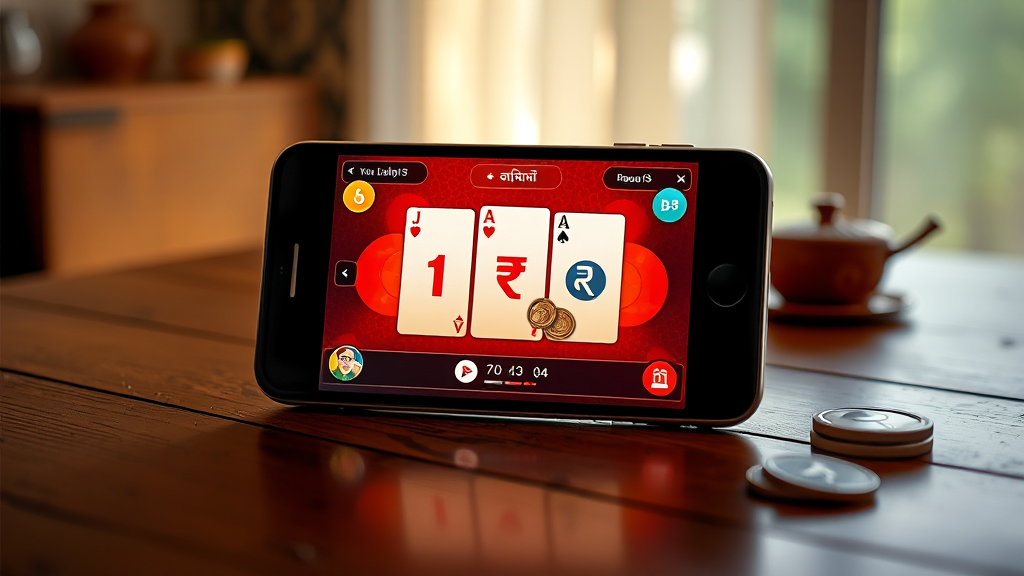
All Teen Patti Online: A Practical Guide to Rules, Tables, and Safe Play
Teen Patti has moved from drawing rooms and festival gatherings to the small screen in a remarkably short time. What used to require a deck of cards, a group of friends, and a free evening can now be enjoyed from a bus, a lunch break, or a quiet corner of the house. If you have been searching for a straightforward explanation of All Teen Patti Online, this guide is written for you. It covers how the game works, what the different table formats mean, how to read a hand, and how to keep your sessions calm and controlled.
The goal here is not to promise overnight wins or secret tricks. Teen Patti is a card game built on probability, psychology, and patience. Understanding those three elements is far more valuable than chasing a lucky streak. Whether you are completely new or you have played a few rounds already, the sections below will help you build a clearer mental model of the game.
What Teen Patti Actually Is
Teen Patti, sometimes called Indian Poker or Flush, is a comparing card game. Each player receives three cards, and the objective is simple: hold the strongest three-card hand at the table, or convince everyone else to fold before the comparison happens. That second path is what makes the game interesting. You do not always need the best cards; you need the best story, delivered at the right moment.
The game uses a standard 52-card deck with no jokers in most formats. Aces can be high or low depending on the sequence, and the ranking of hands is fixed. Once you memorise the order, the rest of the game becomes about reading people and managing your stack.
Online versions preserve these core rules but add conveniences: automatic shuffling, instant hand comparison, timers, and chat features. They also remove the physical tells that experienced players rely on, which shifts the emphasis toward betting patterns and timing.
Hand Rankings You Must Memorise
Before you sit at any table, the hierarchy should be automatic. You should not have to think about it while a timer is running down. Here is the standard order from strongest to weakest:
- Trail or Set: Three cards of the same rank, such as three Kings. This is the strongest possible hand.
- Pure Sequence: Three consecutive cards of the same suit, such as 5, 6, 7 of hearts.
- Sequence or Run: Three consecutive cards of mixed suits.
- Colour or Flush: Three cards of the same suit that are not in sequence.
- Pair: Two cards of the same rank plus one unrelated card.
- High Card: Three unrelated cards, decided by the highest card.
A common mistake among beginners is overvaluing a colour. A flush looks impressive, but it loses to any sequence and to any trail. Knowing this prevents you from pushing too many chips into a pot that is already beaten.
Table Formats and Betting Styles
Online platforms usually offer more than one way to play. The two broad categories are classic and variation-based, and within each there are differences in betting limits and player counts.
Classic Tables
Classic Teen Patti follows the traditional structure. Players post an ante, receive three cards, and then choose to play blind or seen. Blind players bet a lower amount; seen players bet double. This creates a natural risk-reward dynamic because a blind player pays less to stay in but has less information.
Variations Worth Knowing
Many apps include variants such as Muflis, AK47, Joker, and Best of Four. Each changes the ranking logic slightly. In Muflis, for example, the lowest hand wins, which flips your entire strategy. In AK47, specific card combinations gain special status. Trying these variations is a good way to keep the game fresh, but it is wise to learn one format thoroughly before jumping between them.
Betting Limits and Stakes
Low-stake tables are ideal for learning. The decisions come faster, the losses are smaller, and you can experiment with bluffing without risking a large portion of your balance. As your understanding improves, you can move to higher limits, but there is no rush. Patience at low stakes builds the habits that protect you later.
Reading the Table Without Physical Tells
Online play removes facial expressions and body language, but it does not remove information. It simply changes where that information lives. Betting speed, bet sizing, and pattern consistency become your primary signals.
A player who suddenly raises after several passive rounds is often holding something strong. A player who bets the minimum every time may be cautious, distracted, or simply protecting a weak hand. None of these observations are certain, but together they form a picture you can act on.
Timing matters as well. In live games, a long pause before betting can suggest uncertainty. Online, the same pause might mean a slow connection or a player checking another app. Treat timing as a weak signal, not a reliable one, and combine it with bet sizing before drawing conclusions.
Bankroll Discipline and Session Control
The most overlooked skill in Teen Patti is not bluffing or hand reading. It is knowing when to stop. A clear bankroll plan protects you from the emotional decisions that follow a bad beat.
A simple approach is to divide your playing budget into small session units. Decide in advance how much you are willing to lose in one sitting, and treat that number as a hard boundary. If you reach it, close the app. If you win, consider setting a target as well, so a good session does not slowly reverse itself.
It also helps to track your sessions in a notebook or a notes app. Recording wins, losses, and the reasons behind big decisions builds self-awareness faster than any tip or strategy article. Over time, you will notice patterns in your own behaviour, such as playing too loosely when tired or chasing losses after a close call.
Choosing a Platform and Staying Safe
The quality of your experience depends heavily on the platform you choose. A well-built app will have clear rules, responsive support, and transparent terms. A poorly built one will have confusing menus, slow withdrawals, and vague policies.
Before committing time or money, read the app’s help section. Look for information about account verification, withdrawal timelines, and how disputes are handled. If those details are missing or hard to find, that is a warning sign. It is also worth checking whether the platform provides responsible-play tools such as session reminders or deposit limits.
Keep your account credentials private, avoid sharing one-time passwords, and be cautious about links received through unknown messages. Legitimate platforms do not ask for sensitive information through casual chat.
Common Beginner Mistakes
Most new players make the same handful of errors. Recognising them early saves both time and money.
- Playing every hand: Folding is a valid and often correct decision. Not every round deserves your chips.
- Ignoring position: Acting later in the betting order gives you more information. Use it.
- Bluffing too often: A bluff works because it is unexpected. If you bluff constantly, opponents adjust.
- Chasing losses: Increasing bets to recover a loss usually deepens the loss instead.
- Skipping the rules of a variant: Each variation changes hand values. Learn before you play.
Avoiding these mistakes will not make you unbeatable, but it will make you harder to exploit, which is the real goal.
Building a Sustainable Routine
Teen Patti is more enjoyable when it fits into your life rather than taking it over. Set aside specific times to play, just as you would for any hobby. Keep sessions short enough that fatigue does not affect your decisions. Take breaks between rounds, especially after a difficult loss.
It also helps to play for reasons other than money. Enjoy the strategy, the psychology, and the social element. When the game becomes purely about the result, the pressure rises and the fun disappears. A balanced mindset keeps the experience positive and your decisions clearer.
Finally, remember that no strategy guarantees a win. Variance is part of any card game. The best players are not the ones who never lose; they are the ones who manage losses well and keep improving over time.
FAQ
Is Teen Patti purely a game of luck?
No. Chance determines which cards you receive, but decisions about betting, folding, and bluffing shape the outcome. Over many sessions, skill has a meaningful influence on results.
How many players can sit at a Teen Patti table?
Most online tables seat between three and six players. The exact number depends on the platform and the specific table format you choose.
What is the difference between blind and seen play?
A blind player has not looked at their cards and bets a lower amount. A seen player has viewed their hand and must bet double. Seen play offers more information but costs more to continue.
Can I practise Teen Patti without spending money?
Many apps offer free or practice tables where you can learn the rules and test strategies without risking real balance. These are a good starting point for beginners.
How do I know if an online platform is trustworthy?
Look for clear terms, visible support channels, transparent withdrawal policies, and responsible-play features. If important information is missing or vague, proceed with caution.